BAY AREA COUNCIL BLOG

acareport 0

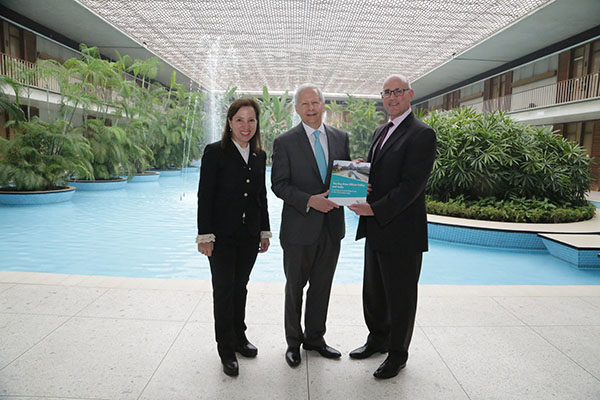
Affordable Care Act Creates Almost 100K Jobs, Boosts Economic Activity in California by $4.4 Billion

A new study by the Bay Area Council Economic Institute suggests that if the Supreme Court strikes down the Affordable Care Act, it may have a negative impact on the California economy.

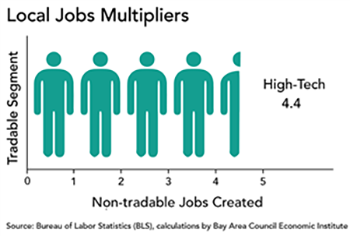
The study, The Economic Impact of the Affordable Care Act on California. concludes that the federal health care law would create almost 100,000 new jobs across California and boost economic output by $4.4 billion. The biggest expected job gains occur in Southern California, with almost 58,000 new jobs, followed by the Sacramento Valley with almost 13,500 new jobs, the Bay Area with 7,600 jobs, San Diego County with almost 6,500 jobs and the remaining 10,000 jobs spread throughout other counties.

“In the debate over the federal health care law, this study shows there has been more heat than light when it comes to understanding economic and jobs impacts,” said Jon Haveman, study co-author and chief economist for the Bay Area Council Economic Institute, the research arm of the Bay Area Council. “By focusing on expanding health insurance coverage, making our health care system more efficient and making our workforce healthier, we can realize important employment and economic gains.”

Download the full report: The Economic Impact of the Affordable Care Act on California.

Driving the employment gains is an overall rise in economic activity stemming from increased spending on healthcare and medical services and the secondary benefits of that money flowing to other parts of the economy. That increased spending will boost overall economic activity in the state by $4.4 billion. Again, the biggest gains will be in Southern California, where net economic activity increases by $3 billion. Sacramento County is the next largest beneficiary of increased spending, with net economic output rising by almost $608 million.

Those figures take into account the dampening impact that provisions such as the employer mandate is expected to have on hiring and economic activity. The mandate, which is among the more hotly contested elements of the Affordable Care Act, requires large employers to provide their employees with health insurance or pay a fine. And yet, the study observes that the employer mandate is a “crucial tool” for the overall expansion of healthcare coverage that on net is a job creator in the state.

“The Bay Area Council’s new economic impact report shows that making the insurance market fairer and more inclusive is an economic boon to the state,” said Julian Canete, President & CEO of the California Hispanic Chambers of Commerce (CAHCC). “The report demonstrates how the federal health care law will help communities such as California’s Latino-owned businesses and workforce by enhancing economic and health conditions to strengthen California’s economy.”

By expanding health care coverage, the study found, the Affordable Care Act will also expand the overall labor force by better maintaining the health of the workforce and preventing workers from being sidelined because of health problems. Broader coverage will also reduce “job lock,” in which uncertainty about changing health insurance discourages workers from seeking better jobs.

“The Affordable Care Act provides an important framework for expanding health care coverage in a way that can boost employment, increase overall economic activity and make people healthier,” said Dr. Micah Weinberg, study co-author and Senior Policy Advisor for the Bay Area Council.

The study is careful to note that “the ultimate impact of health care reform, though–both in terms of its true economic implications and whether it achieves its substantive policy goals–depends heavily on implementation, which will require close partnership between the federal government, the states, and the private, charitable, and non-profit sectors.”

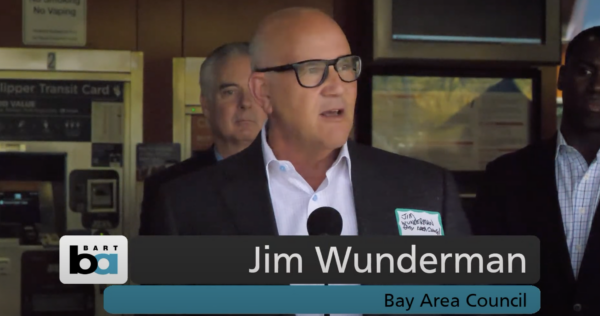
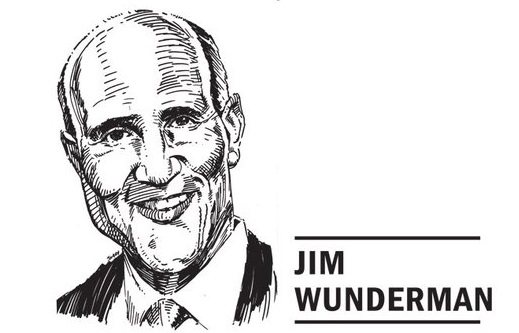
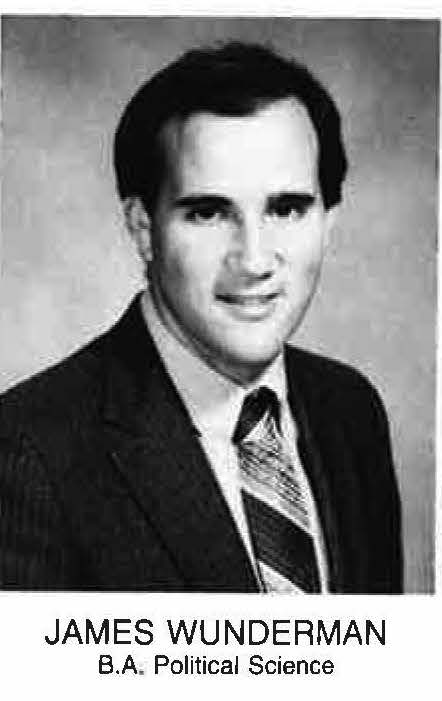
“The Bay Area Council is playing a leadership role in the business community in working closely with state officials and other key policy makers in implementing the Affordable Care Act in California, keeping the focus on reducing health care costs and improving public health. These are the things that will help improve California’s business climate and keep us competitive in the global marketplace,” said Jim Wunderman, President and CEO of the Bay Area Council.

clinton 0

Clinton, Rice, Brown and CEOs Wow Packed Outlook Conference

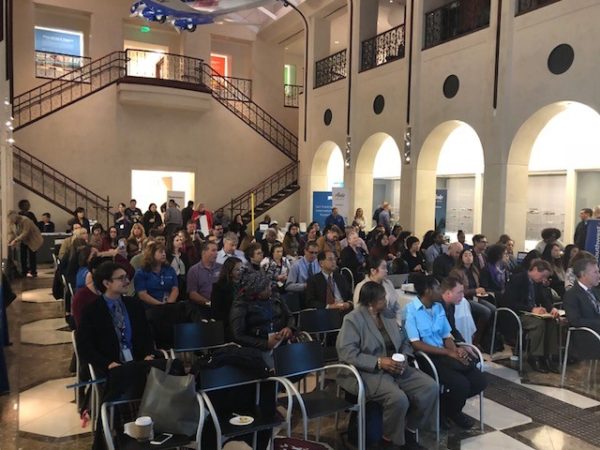
California will come “roaring back,” but it “will happen much faster if we work together.” That was among the messages President Bill Clinton delivered to a captivated audience of 1,100 top executives, elected and other public officials during the Bay Area Council’s 2012 Outlook Conference on Thursday at the California Theatre in San Jose. Clinton also offered some insights on what he thinks it will take for President Obama to win in November and he answered a question from Marcus & Millichap Founder and CEO George Marcus about Secretary of State Hillary Clinton’s future plans.

View videos of the speakers.

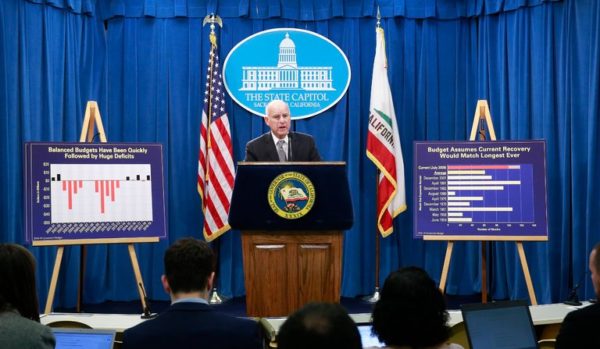
Governor Jerry Brown talked about the California budget, his plans for opening a California trade office in China and the tax measure he’s seeking to qualify for the November ballot. Former Secretary of State Condoleezza Rice focused on the global and political landscape and education and answered a question from Visa CEO Joseph Saunders about whether she would consider being Mitt Romney’s running mate. Anthony Earley, in his first major address since becoming Chairman, CEO and President of Council member PG&E Corp., spoke about the imperative for California to invest in core energy infrastructure – a subject he acknowledged does “not typically fire the public imagination,” but which he stressed “is one of the golden threads that keep the fabric of our economy strong.” DuPont CEO Ellen Kullman talked about her company’s focus on the long-term megatrends of feeding the world, reducing dependence on fossil fuels, and protecting people and the environment. Kaiser Permanente CEO George Halvorson, who is leading the Council’s push to increase healthcare affordability and improve quality, outlined the “four elements of care” that he sees transforming the delivery of healthcare in the future. And LinkedIn CEO Jeff Weiner discussed the untapped power of social networking  to connect unemployed Americans with unfilled jobs. Full remarks for all Outlook Conference speakers will be posted to the Council’s YouTube channel over the coming days.

cybersecurity 0

Cybersecurity Bill Advances with Council Support

Bay Area businesses struggling with the challenges of protecting consumer data, intellectual property, and internal information systems against growing cyber threats may be one step closer to receiving valuable assistance from the federal government and their peers.  Last week, the U.S. House of Representatives passed the Cyber Information Sharing & Protection Act (CISPA), a bill which would make it easier for the federal government to share classified cyber threat information with approved American companies and would better enable the business community to defend their networks against such attacks. Working with the members of its Committee on Cybersecurity under the leadership of Chair Ellen Richey of Visa, the Bay Area Council urged the House to pass legislation that would break down barriers to threat sharing while preserving strong protections for personal information.  The Council worked with the bill sponsors early on and then helped Congressmen Mike Rogers (R-MI) and Dutch Ruppersberger (D-MD) build bi-partisan support for CISPA’s passage by publicly endorsing the bill, joining a number of other U.S. employers, industry associations, privacy advocates, and civil rights groups.

janetsac12 0

Council Members Take Priority Issues Straight to the Governor’s Office

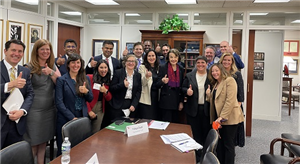
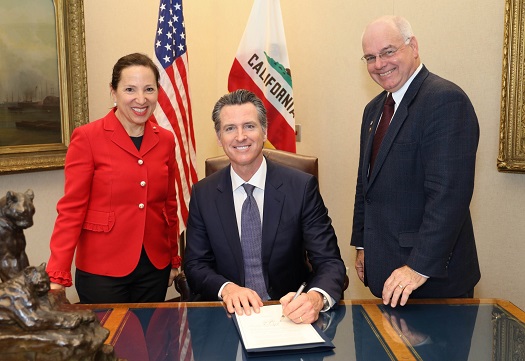
Delegates on the Bay Area Council’s annual Sacramento Advocacy Day trip on Wednesday got the ear of the Governor and top Legislative leaders during an afternoon of substantive, face-to-face meetings focused on the Council’s highest priority issues. This annual trip is extremely important to advancing the Council’s policy priorities, nurturing relationships among Council members and with our state’s top decision makers and gaining valuable insight into California’s complex political process.

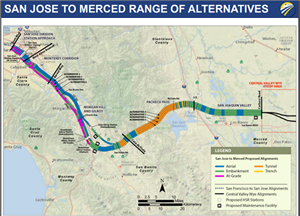
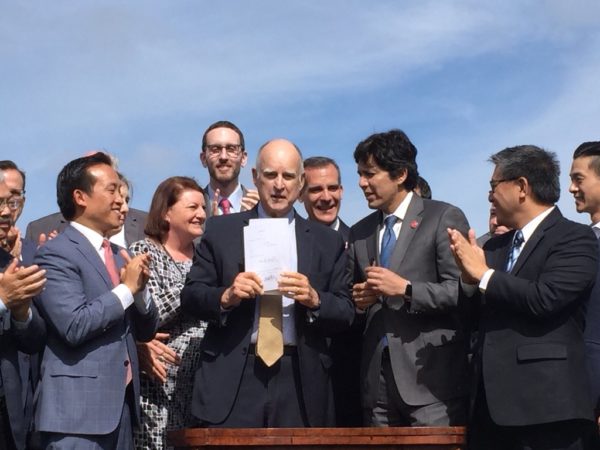
Gathered in the Horseshoe at the Capitol, Council members shared their issues directly with Governor Brown and Legislative leaders. Senate President Pro Tem Darrell Steinberg, introduced by Andrew Giacomini, Co-Chair of the Council’s Government Relations Committee and Managing Partner of Hanson Bridgett, led off the afternoon with discussions about high speed rail and the California Environmental Quality Act, both among the Council’s top priorities this year. Michael Covarrubias, Chair of the Council’s CEQA Committee and Chairman and CEO of TMG Partners, talked about the importance of CEQA reform in improving California’s business climate. Michael Rossi, the Governor’s senior jobs advisor and a member of the California High Speed Rail Authority, also focused on high speed rail (see related item below) and foreign trade. The Council has been working closely with Mr. Rossi in recent months to provide support for the Governor’s plans to open a California trade office in China, where the Council operates an office in Shanghai.

The Governor joined the discussion on high speed rail, whose fate will be decided by the state Legislature in the coming weeks, and expressed his enthusiasm for growing California’s foreign trade. Gov. Brown also spoke about his 12-point pension reform plan and discussed the tax measure he is working to get on the November ballot. After a lively discussion with the Governor, Council Chair Janet Lamkin introduced Nancy McFadden, Executive Secretary to the Governor, who outlined the Governor’s priorities for the coming year. Again, two of the issues — CEQA reform and pension reform – are aligned with the Council’s priorities. Tom Torlakson, Superintendent of Public Instruction, talked about his optimism for improving education quality in California. Anne Stausboll, CEO of CalPERS, was less optimistic in her briefing on the fiscal challenges currently facing the nation’s largest public pension fund. Jim Bourgart from Council member Parson Brinckerhoff introduced Assembly Republican Leader Connie Conway, who commented generally on the state’s often-maligned business climate and its negative impact on economic growth. Caroline Rodman of Council member T.Y. Lin introduced Sen. Mark Leno, chair of the powerful Senate Budget and Fiscal Review Committee, who shared his ideas on addressing the state’s fiscal problems.

Council delegates closed out the day with a reception and dinner at Ella Dining Room & Bar with many members of the Bay Area Legislative Caucus. The group was also treated to a surprise dinner guest when Governor Brown stopped by, taking time to sit and talk with members at almost every table. The Council extends its heartiest thanks to sponsors T.Y. Lin, Parsons Brinckerhoff and Blue Shield of California for making this important visit happen. For information on how to get involved in the Bay Area Council Government Relations Committee, please contact Matt Regan at mregan@bayareacouncil.org or at 415-946-8710.

View photos from the trip.

sacdaybrown 0

Photos from the Council’s Sacramento Advocacy Day

vote 0

Council Announces Positions on Ballot Measures

The Bay Area Council Executive Committee has taken positions on a number of statewide measures and one local measure appearing on the June and November ballots. The Council continues to analyze other initiatives that have been proposed for the November ballot. Thank you to all Bay Area Council members who participated in the survey

Measure B, San Jose Pension Reform (June 2012)

Summary: With the unsustainable cost of public pensions imperiling fiscal stability, Mayor Chuck Reed has crafted a bold measure that treats existing employees fairly and establishes prudent reforms to San Jose’s retirement system.  The outcome of this measure could have statewide implications. Making public retirement systems more fiscally sustainable is among the Council’s lead priorities.

Position:  Support

Proposition 28: Limits on Legislators’ Terms in Office (June 2012)

Summary: Reduces the total amount of time a person may serve in the state legislature to 12 years, but increases number of terms a person could serve in either the Assembly or Senate. This measure would allow legislators to develop the greater policy expertise to lead California.  This measure will enable legislators to better focus on developing sound public policies, instead of having to run for their next office.

Position: Support

Safe, Clean and Reliable Drinking Water Act (November 2012)

Qualified for the November ballot

Summary: This proposed measure would allow the state to borrow $11.1 billion to overhaul the state’s water system. The Bay Area Council participated significantly in the development of the compromise that led to this package and to it being placed on the ballot.

Position:  Support

Tax for Education and Early Childhood Programs (November 2012)

Circulating for November ballot qualification

Summary:  The proposed initiative is well-intentioned but does not include any reforms to address California’s structural budget problems and improve our low-performing education system. Major studies have consistently indicated that reform must accompany new investment. The measure would introduce an across-the-board 1 percent increase in state income tax rates for most Californians, expiring after 12 years and generating an estimated $10 billion earmarked for public school districts and early childhood development programs.

Position: Oppose

The Government Performance and Accountability Act (November 2012)

Circulating for November ballot qualification

Summary:  This proposal calls for sensible budgeting, accountability and governance reforms, by establishing two-year state budget cycle; prohibiting the Legislature from creating expenditures of more than $25 million unless offsetting revenues or spending cuts are identified; permitting the Governor to cut budget unilaterally during declared fiscal emergencies if Legislature fails to act; requiring performance reviews of all state programs; and, requiring performance goals in state and local budgets, among other features.

Position: Support

jobscouncil 0

COUNCIL MEMBERS WEIGH IN ON PRESIDENT’S JOBS AGENDA

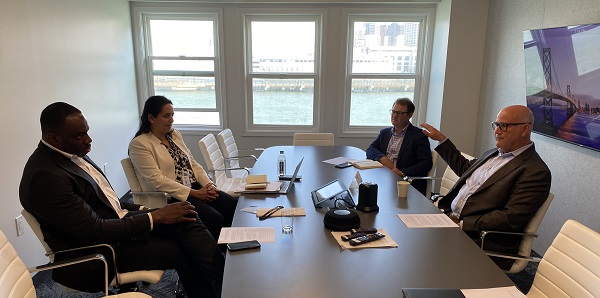
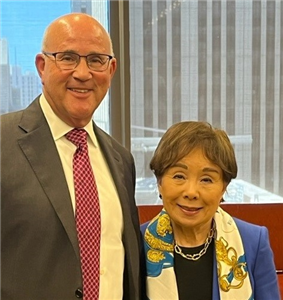
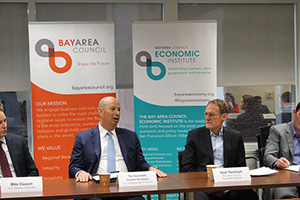
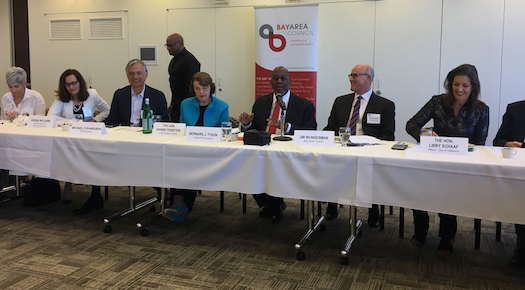
The White House this week sought input from Bay Area Council members on President Obama’s jobs and economic agenda. Don Graves, Executive Director of the President’s Council on Jobs and Competitiveness, and Laura D’Andrea Tyson, Chair of the Bay Area Council Economic Institute, led a discussion with top executives on the Bay Area’s take on job creation, remaining innovative and staying competitive. Among the executives attending, Marvell Technology Group Co-Founder Weili Dai encouraged the Administration to focus on supporting advanced technology manufacturing, an area that could be a comparative advantage for the U.S. The meeting was part of the Administration’s effort to elicit private sector views on national strategies for growth and job creation. Bay Area leaders covered issues including infrastructure investment, immigration, innovation and manufacturing.
caltrain 0

MORE PROGRESS ON CALTRAIN MODERNIZATION

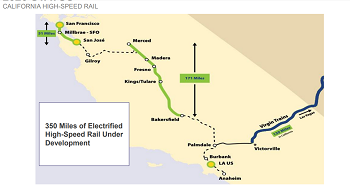
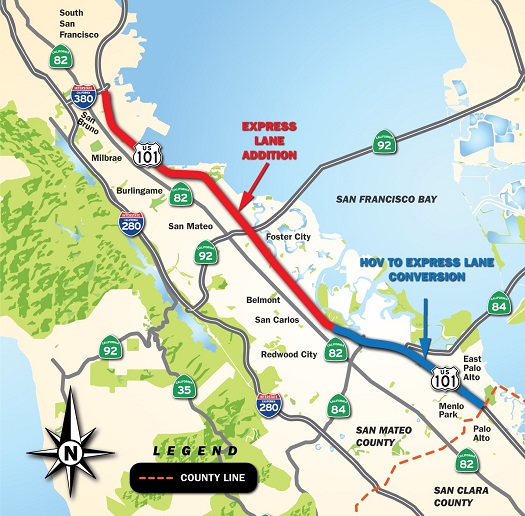
Regional transportation officials are making progress in staking a claim for early investment by the California High Speed Rail Authority in electrifying the Caltrain commuter service between San Jose and San Francisco. The Council recently helped mobilize regional action to secure Rail Authority investment in parallel with similar efforts by Southern California transportation officials seeking funding to improve local transit systems in the Los Angeles basin that would ultimately connect to the bullet trains. A memorandum of understanding that outlines the region’s plans for electrifying Caltrain, which is among the Council’s top priorities, could be ready for approval in coming weeks. The Council is also partnering with Caltrain and the Metropolitan Transportation Commission on a study of the economic value of electrifying Caltrain. To learn more about the Council’s efforts to modernize Caltrain, please contact Policy Vice President Michael Cunningham at (415) 946-8706 or mcunningham@bayareacouncil.org.

pension1 0

NEW LIFE FOR PENSION REFORM THIS YEAR?

In a surprise move, state GOP leaders last week introduced a series of bills that mirror Governor Brown’s 12-point pension reform plan, which had been considered all but dead this year. This puts Democratic leaders in the Legislature in somewhat of an awkward spot, and they must now either oppose the bills or come up with meaningful reform ideas themselves.  There will clearly be many more acts in this play before it’s over, so don’t change channels.  With pension reform among the Council’s top priorities this year, President and CEO Jim Wunderman will be in Sacramento this week to meet with the Governor’s pension team and legislative leaders to discuss what happens next. To learn more about the Council’s pension reform work, contact Policy Vice President Matt Regan at (415) 946-8710 or mregan@bayareacouncil.org.


erinh2 0

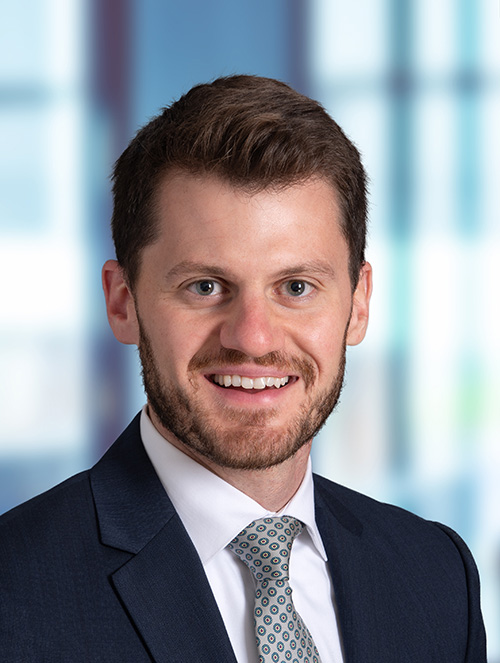
Council Welcomes New Foundation Director

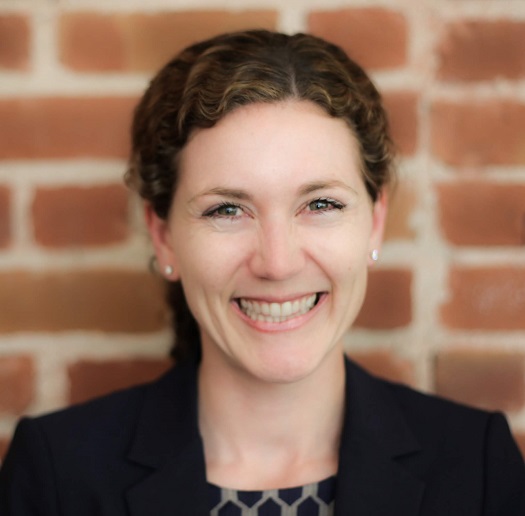
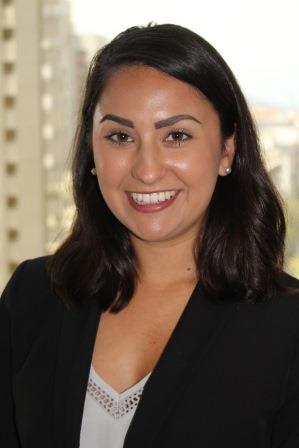
The Council is pleased to announce the appointment of Erin Hafkenschiel as Director of the Bay Area Council Foundation, the charitable organization founded in 2004 to fund, manage and implement initiatives that impact the entire Bay Area. A Fulbright Scholar and graduate of UC Berkeley and the John F. Kennedy School of Government at Harvard University, Erin brings to the Council extensive experience and knowledge in the areas of community and economic development, urban planning and public and private infrastructure development. Learn more about Erin.