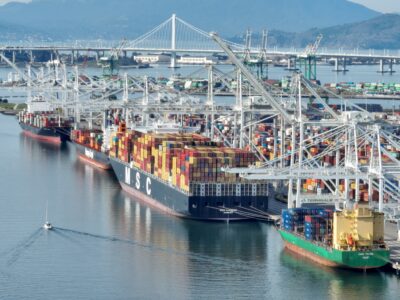

Port of Oakland Sailing Steady Course in Face of Global Trade Disruptions
The Port of Oakland, a major driver of Bay Area economic activity, is showing remarkable resilience in response to dramatic changes in U.S. trade policy that have caused major disruptions to trade activity and supply chains around the globe. A report this week found that cargo volumes at the port were largely stable over the past year, with declines in imports largely balanced by increases in exports. Port of Oakland Executive Director Kristi McKenney serves on the Bay Area Council’s Executive Committee and we’ve been proud work with her and her team to advocate for policies that strengthen the port’s business and trade overall.
A story this week in the Mercury News noted that the Port has proven to be “surprisingly adaptable, maximizing efficiency and maintaining its relationships with shipping companies.” Port Marketing Manager Carolyn Armquist said the broader challenges and disruptions have “really encouraged communication between all the partners… to work through a very volatile environment.”
“What has helped us remain flat year over year in terms of our volumes, rather than some of the huge swings that you’ve seen at the other ports, is that we are more import-export balanced,” Almquist said. “We have seen our import volumes soften, but in terms of the tariffs, it seems that we’ll be okay.”
A major source of the Port’s strength has been the export of agricultural products from California’s breadbasket that aren’t available anywhere else. Armquist also cited efficiencies the Port has employed in how shipping containers are loaded to maximize volume. In addition to shipping and freight, the Port also operates the city’s airport and manages 20 miles of waterfront property, including at Jack London Square where the Council has worked to remove regulatory and other obstacles to new economic development.
Related News